I work under the name Enos.
My trajectory began in the friction of non-belonging—born in Belgium to German immigrant parents, navigating a landscape where identity was never a given. Conventional structures did not provide orientation. A nervous system wired for high-resolution perception, alongside ADHD and autism, meant that coherence had to be built outside of consensus. This was not philosophical. It was functional.
By age 16, the search for stability collapsed into heroin addiction. At 19, rehabilitation marked a decisive reorganization—an encounter with the reality that structures sometimes need to break before something viable can form.
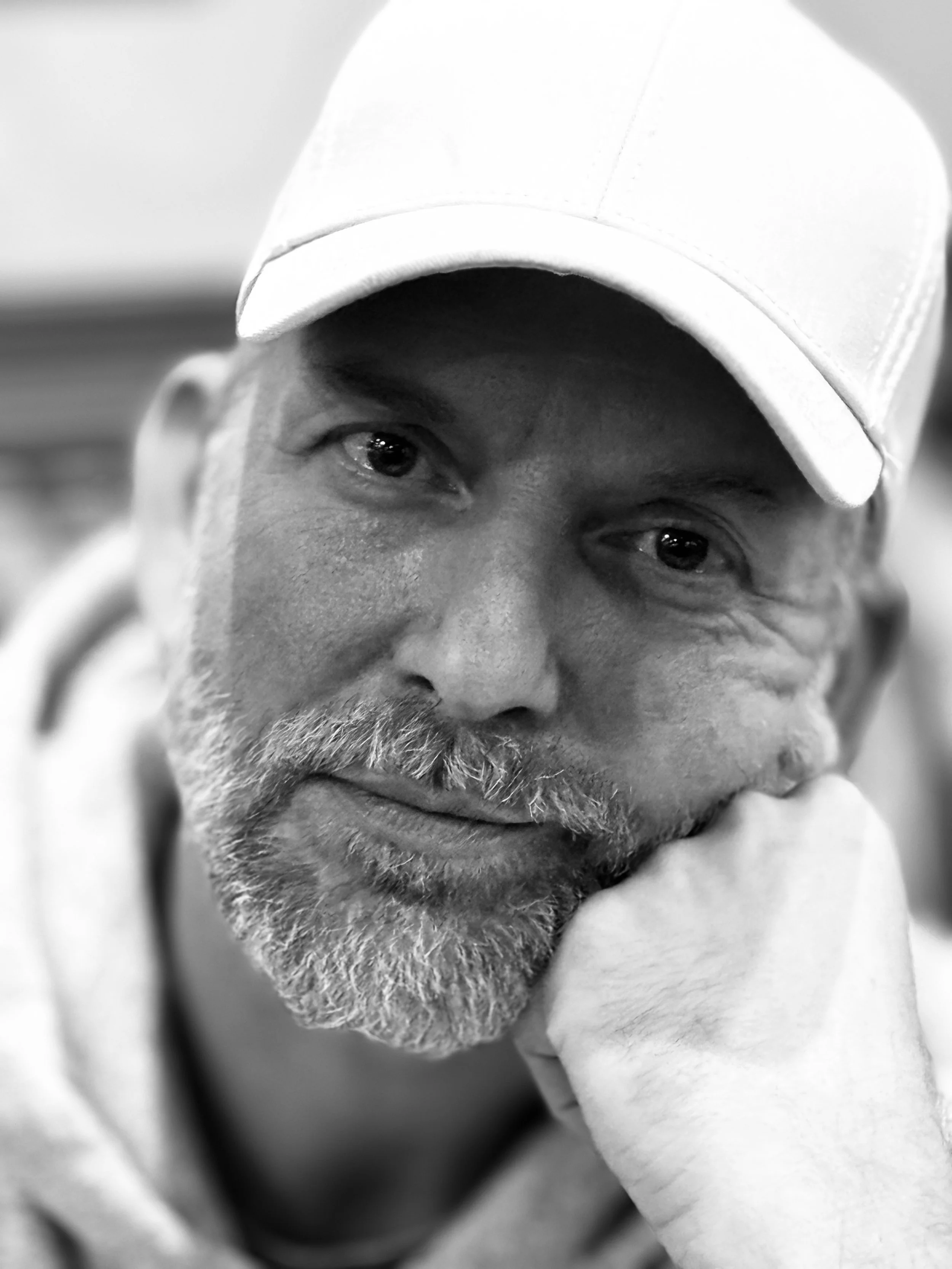
I work with individuals no longer seeking solutions or identities,
but prepared to meet the developmental and evolutionary demands of their lives with precision and accountability.
From there, my path unfolded through long-term immersion across cultures, disciplines, and initiatory contexts. I have lived, trained, and worked across Europe, South America, India, Southeast Asia, the Middle East, and Oceania, engaging developmental psychology, somatic and parts-based work, ancestral processes, yogic systems, non-dual traditions, Amazonian plant medicine and dieta work within Shipibo traditions and initiatory temple contexts..
These were not adopted as frameworks, but entered as environments—tested in lived conditions, across time.
A further rupture dismantled the remaining personal orientation. The discovery of a long-term betrayal within an intimate relationship ended identity structured around future projection. What followed was not repair, but movement into deeper initiatory processes across India, Peru, and the Amazon—no longer oriented toward healing, but toward what remains when identity fails.
This did not resolve into transcendence. It led into increased responsibility—relationally and collectively. Awareness could no longer be held as a private resource. It became functional only in contact.
Between 2021 and 2025, this orientation was further stripped of personal reference. Over four years, my immediate family lineage dissolved—my mother, father, and sister. With that, the remaining structures of identity collapsed. I buried their ashes with my bare hands in the forest around Neanderthal in Germany.
From that point, the work was no longer developmental in the conventional sense. It became existential: how to remain coherent without inherited structures, and how to allow experience to reorganize function rather than be reduced to explanation.
SourceNode emerged from this context. Not as a project or synthesis, but as a consequence.
A field capable of holding trauma, ancestry, nervous system dynamics, and forward evolution within a single adaptive structure, without collapsing them into narrative.
The emphasis shifted from meaning to function: what stabilizes coherence in real conditions, across bodies, relationships, and time.
My work now expresses through three forms:
– direct relational engagements
– material forms designed to anchor coherence
– ongoing documentation of the work as it evolves
I do not position this as a method, lineage, or belief system. It remains responsive, contextual, and unfinished by design.
This includes one-on-one work, longer initiatory processes, and the creation of objects and spaces intended to function as stabilizing interfaces rather than symbolic artifacts.
I do not offer guidance in the traditional sense.
I work where orientation arises through contact, where clarity is earned through engagement, and where responsibility replaces narrative.
This biography is not a story of becoming.
It is a statement of position.
The work continues as long as coherence is required.
— Enos